
The China Tea Marketing Association (CTMA)
The China Tea Marketing Association (CTMA) was found in 1992

The China Tea Marketing Association (CTMA) was found in 1992
New-style Tea Beverages have become a global obsession, winning fans from Hangzhou to Honolulu and from Taipei to Toronto. But for many drinkers, the enjoyment comes with a familiar trade-off: caffeine. What begins as an afternoon pick-me-up can end in jitters, a racing heart, and a night spent staring at the ceiling.

Enter Dr. Mao Limin, a tea-science PhD from Zhejiang University and an early advocate of organic tea cultivation in China. His Zhejiang-based biotech firm, Zhejiang Tea Doctor Biotechnology (“Tea Doctor”), says it has developed a decaffeination approach that could refine how the world enjoys tea-based drinks—not just bubble tea, but the broader category of New-style Tea Beverages.
Using supercritical CO₂ extraction, a technique long used in pharmaceutical and food processing—Tea Doctor claims it can remove about 85% of caffeine while keeping much of tea’s natural aroma and taste intact. Unlike some conventional approaches that can dull flavor or depend on chemical solvents, the company positions its method as a cleaner alternative designed for products where taste is non-negotiable: fruit teas, milk teas, cold brews, and sparkling tea drinks.

“The caffeine-sensitive market is huge, but it’s still underserved,” says co-founder Wu Jing. “Many people want the ritual and the flavor, but not the side effects. We wanted a method that preserves both enjoyment and sleep.”
Science is deceptively simple. When carbon dioxide reaches a supercritical state, it takes on properties of both a gas and a liquid. In that form, it can selectively extract caffeine while leaving many desirable compounds—such as polyphenols and amino acids—largely in place. The company says this helps maintain the tea base that New-style Tea Beverages depend on: fragrance, body, and a clean finish that holds up when paired with milk, fruit, or ice.
And the innovation doesn’t stop at the drink base. Tea Doctor says the same extraction technology can upgrade tea seed oil—once treated as a cloudy, low-value byproduct—into a clearer, premium ingredient aimed at high-end applications, including skincare and personal care products. In its view, the technology links beverage innovation with broader value creation across the tea plant.
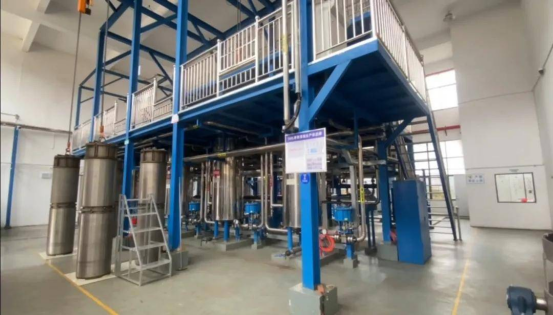
From tea gardens across Zhejiang, Guizhou, and Yunnan to overseas buyers, Tea Doctor has built what it describes as a “tech meets agriculture” supply chain. Its leaf-and-seed model is designed to stabilize raw-material supply and raise farmer incomes by improving the value of more parts of the tea plant—turning what was once waste or secondary output into a new revenue stream.
For brands, the appeal is straightforward: a lower-caffeine tea base that can be used across menus without forcing consumers to choose between flavor and rest. According to the company, multiple partners are already testing the approach, and early customer reactions have been consistent: the same cravings, fewer consequences—“tea drinks I can enjoy without counting sheep,” as one put it, and “late-night orders, sleep unaffected,” said another.
As health consciousness meets beverage innovation, Tea Doctor’s technology represents more than a single product upgrade. It’s part of a wider shift in the tea industry: using modern processing to adapt an ancient beverage to today’s pace—where people still want comfort and ritual, but also want to wake up well-rested.
The future of New-style Tea Beverages? Lower in caffeine, high on flavor, and designed for modern living.
